Lifestyle Society Cairo
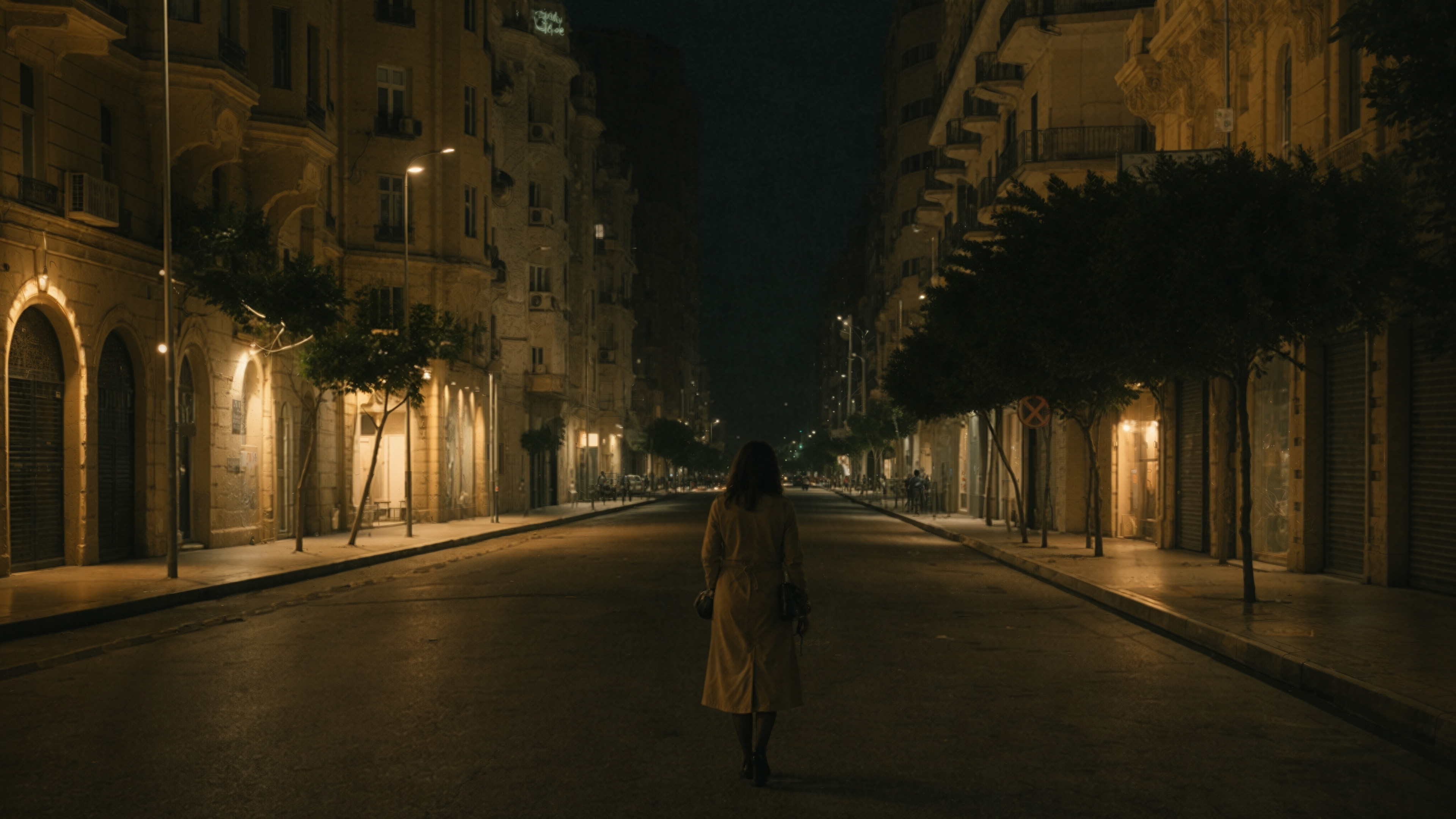
If you stand on the Corniche at dusk, just as the sun begins to bleed into the haze over the Nile, you can hear the city shift gears. It is not a slowing down. Cairo does not slow down. It is a change in frequency—a modulation from the frantic staccato of the workday into the heavy, rhythmic hum of the evening. The car horns still blare, but the intention behind them changes. They are no longer signaling a rush to get to somewhere; they are signaling a desperate need to return from somewhere.
Ask a Cairene about "work-life balance" in this moment, and the reaction is rarely a verbal answer. It is a laugh. A dry, knowing exhale that sits somewhere between amusement and exhaustion.
It is the laugh of someone who knows that the concept itself feels like a traveler who arrived at Cairo International Airport but lost their luggage on the way to Downtown. It is a polished, Western idea—a clean geometric line drawn in a city that only understands spirals.
In Egypt, work does not end when you clock out, and life does not politely wait in the lobby until you are free. They are not separate entities placed in neat boxes of "9-to-5" and "after-hours." They are tectonic plates that sit on top of one another, grinding, shifting, and causing daily earthquakes. They interrupt each other. They negotiate constantly.
To understand professional life in Egypt, one must first accept a fundamental truth: The boundary is not a wall. It is a permeable membrane. And in this city, we are all just trying to keep our heads above the water.
The City That Never Fully Exhales
In the corporate towers of New Cairo and the bustling workshops of Shoubra, the workday does not simply stop; it dissolves.
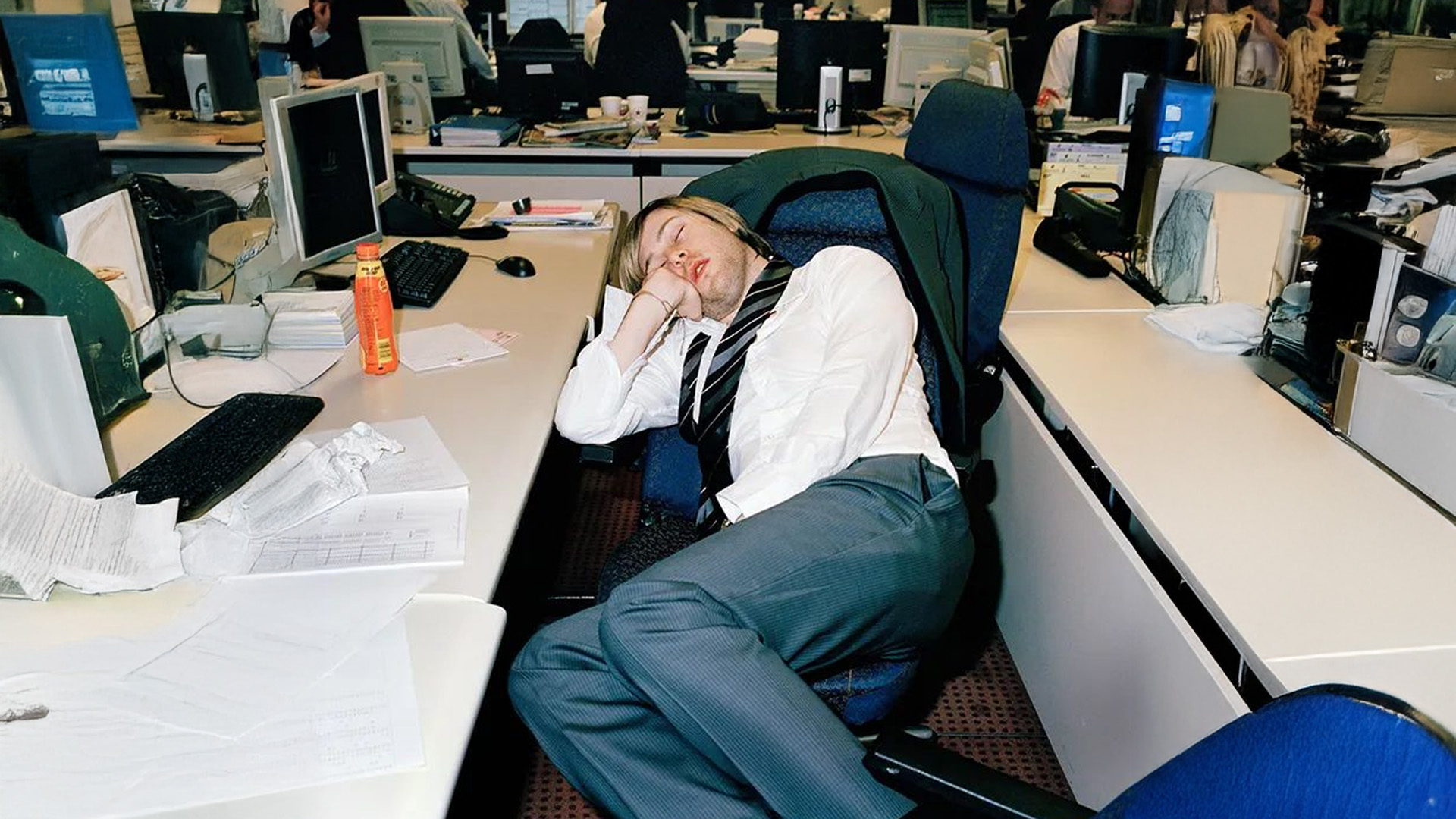
There is no psychological "off" switch in a fluctuating economy. The laptop closes, but the phone remains a glowing tether in the palm of the hand. Emails are answered in the back of Ubers, the blue light illuminating tired faces as the car navigates the labyrinth of the Ring Road. Conference calls are taken while buying vegetables, the mute button pressed frantically to mask the sound of a street vendor announcing his prices.
Deadlines here are not fixed points on a calendar; they are fluid targets that get pushed between family obligations, sudden crises, and social commitments that are culturally impossible to refuse.
This perpetual state of "on-ness" is not necessarily born of passion. It is rarely the "hustle culture" celebrated in Silicon Valley, where overwork is a badge of honor worn to signal virtue. In Egypt, the blur between professional and personal time is born of precaution.
The economy here does not offer cushions; it offers concrete. Jobs do not promise longevity. Inflation does not pause for breath. And so, the Egyptian worker stays alert. Available. Reachable. The line between being an employee and being a person blurs because stopping feels risky.
To disconnect is to admit that you are not indispensable. And in a city of twenty million people fighting for space, being indispensable is the ultimate currency.
Work as Insurance, Not Identity
For many, the job carries a weight far heavier than a LinkedIn title. It is a fortress.
In Western narratives, we often speak of work as a path to self-actualization—a way to "find one's passion." In Egypt, while passion exists, the primary driver is often something more primal: Security.
Work is a promise made to families long before it is made to employers. It is the quiet, crushing pressure of being the "reliable one." The eldest son who must pave the way; the daughter who supports the household; the father who needs to ensure the school fees are paid before the currency shifts again.
When work becomes the mechanism that holds a family’s dignity intact, "balance" feels like a selfish proposition. How do you balance survival? How do you tell your boss you cannot take the call at 9:00 PM because you need "me time," when that call might secure the promotion that secures the rent?
In this reality, ambition is often mistaken for survival instinct. Burnout is normalized as responsibility. Working late isn’t praised as exceptional; it is expected as the baseline. Exhaustion isn’t questioned; it is understood—a silent language shared between colleagues who nod at each other in the elevator, eyes heavy, coffees strong.
Rest, in this context, becomes something you must earn through depletion, not something you deserve simply for being human.
The Architecture of Being Needed
There is a specific archetype that the Egyptian culture produces: The Fixer. The Dependable One. The person who knows a guy, who solves the problem, who handles the crisis.
This role is woven into the social fabric. We are raised to be of service—to our parents, to our neighbors, and inevitably, to our companies. The employee who picks up the slack is not just seen as a good worker, but as a "gad’aa" (a distinct Egyptian term for someone reliable, brave, and chivalrous).
But this cultural virtue comes with a heavy tax. The "gad’aa" employee is the one who never says no. They are the ones who absorb the stress of the collective. To step away, to set a boundary, feels like a betrayal of character.
So when a well-meaning HR seminar suggests "setting healthy boundaries," it can feel almost insulting to the Egyptian ear. Balance between what? Between the crushing weight of responsibility and the harsh reality of necessity?
Here, overworking is rarely an act of ego. It is an act of insurance. We over-deliver today because we do not know what tomorrow holds. We hoard goodwill with our employers the way we hoard non-perishables—just in case.
Life in the Cracks
And yet, to say that Egyptians do not "live" would be a lie. In fact, the paradox of Cairo is that despite the overwork, life here is lived with a ferocious intensity.
Life in Egypt refuses to disappear. It does not wait for permission. It does not pause for Google Calendar invites. It crashes the party.
It shows up in the form of a coworker who arrives with foul and falafel for the whole team, transforming a frantic morning into a twenty-minute communal ritual of breaking bread. It shows up in the wedding you attend on a Tuesday night, even when your body is screaming for sleep, because your absence would be an insult deeper than fatigue.
It shows up in the "ahwa" (coffee shop) at midnight, where the air is thick with apple tobacco smoke and the clatter of dominoes. You see men in suits, ties loosened, laughing with a boisterous energy that defies the timestamp. You see friends meeting for tea for just thirty minutes—a "micro-dose" of connection that fuels them for the next six hours of struggle.
In calmer cities, life happens in the large, open spaces of free time. In Cairo, life squeezes itself into the cracks. It thrives in the margins.
We do not have "weekends" in the traditional sense; we have pockets of air. We steal moments of joy from the jaws of the schedule. A joke cracked in a high-stakes meeting that breaks the tension. A spontaneous drive to get ice cream at 1:00 AM. A phone call to a mother that lasts an hour during the commute.
Life here does not happen outside of work. It happens through it, around it, and despite it.
The Oxygen of Connection
What outsiders sometimes mistake for a lack of professional boundaries is, in reality, a completely different hierarchy of human needs.
In many corporate cultures, efficiency is the highest god. In Egypt, connection is the deity we worship.
We tolerate the lack of work-life balance because the workplace itself provides a social safety net. Your colleagues are not just people you email; they are the people who visit you when you are sick, who attend your sister’s engagement, who bring you food when you are stressed.
The boundary is porous, yes, but that porosity allows warmth to seep in.
Isolation is the one thing Cairo does not permit. Meals are shared because eating alone is viewed with suspicion and pity. Gatherings happen because presence matters more than convenience. Even exhaustion is a communal activity. Complaints are shared like folklore. Stress is softened by being spoken aloud, validated by a chorus of voices saying, "Ma’alesh" (never mind, it will be okay).
We trade sleep for income, yes. We trade weekends for security. But we also trade time for people. We give hours to relationships because, in a shifting world where currencies float and governments change, relationships are the only constant gravity.
Redefining the Equation
Perhaps work-life balance, as a static concept, is a myth in Egypt. The polished version—the yoga class at 6:00 PM, the unread email notification, the pristine separation of church and state—does not translate.
But balance as a feeling? That is not a myth. It just looks different here.
It is not a steady state of equilibrium. It is a dynamic, messy, loud, and chaotic juggling act.
It is not found in silence; it is found in the noise. It is found in the loud dinners that stretch into the early morning. In the shared stress that binds a team together. In the tea drunk on balconies while watching the traffic crawl on the 15th of May Bridge.
It is a balance of finding relief, not rest. Of seeking presence, not peace.
In Cairo, we measure balance not by the hours we save for ourselves, but by how much of ourselves we manage to keep intact.
How often did you laugh today, even when you were overwhelmed?How often did you feel seen, even when you were stretched thin?How often did you show up for someone, even when you had nothing left to give?
It is measured in small victories: A commute where the radio played the right song. A conversation that made you forget the deadline for ten minutes. A moment of silence at night when the city finally, briefly, exhales.
This is the Egyptian version. It is not ideal. It is certainly not clean. It is not exportable to a slide deck or a wellness retreat.
But it is deeply, undeniably human.
We do not balance work and life. We braid them together, messy and tight, hoping the rope is strong enough to hold us. And maybe, just maybe, that resilience is its own kind of luxury.